Newsletter
Join the Community
Subscribe to our newsletter for the latest news and updates
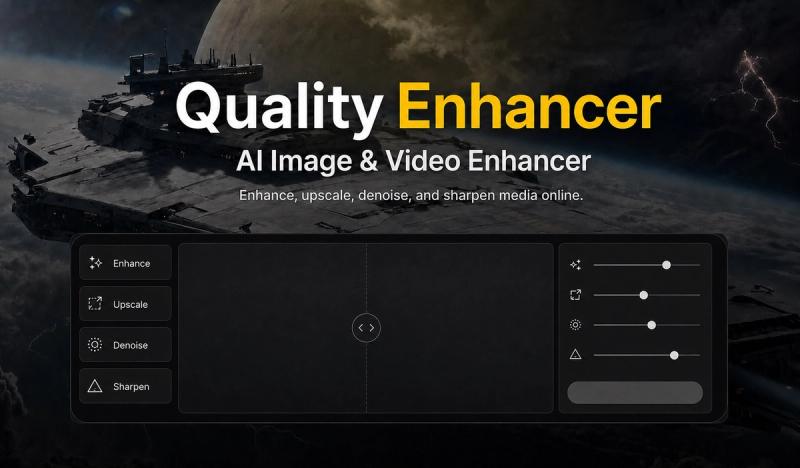
AI-powered image and video enhancer for creators, marketers, and teams. Enhance, upscale, denoise, and sharpen media online.
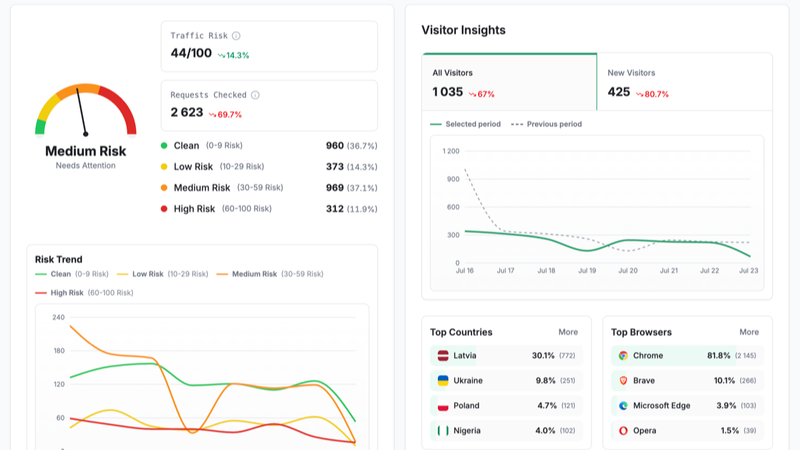
Traffic, search & AI signals for qualityenhancer.org.
Third-party traffic estimate · Updated Sep 9, 2026
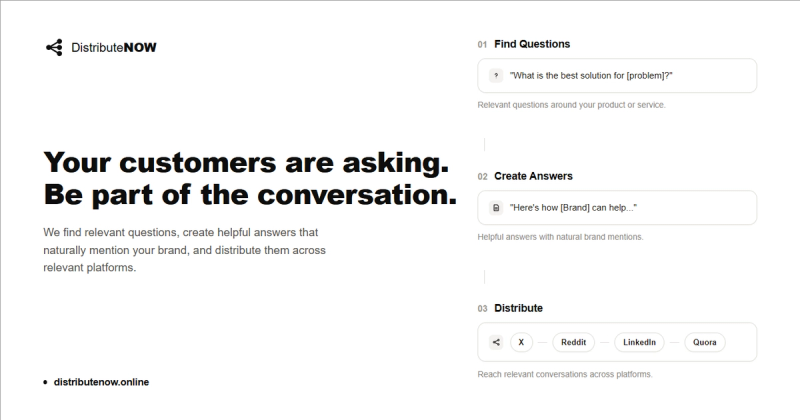
Submit your own product to reach creators and founders looking for the next tool to try.
Quality Enhancer is an AI-powered web app that enhances, upscales, denoises, and sharpens video and images directly in the browser, with a free tier that requires no login.
Quality Enhancer is an online video and image quality enhancer. It takes common media files—MP4, MOV, WebM for video, and PNG, JPG, WebP for images—and uses AI to recover detail, reduce noise and compression artifacts, and increase resolution up to 4K (at 2x or 4x scale). The free mode processes media on your device, while the paid Ultra mode works on the Quality Enhancer servers and requires an account. The site is operated by the team behind Quality Enhancer and is accessible at qualityenhancer.org.
Creators and social media managers can use it to fix soft or compressed video exports before publishing. Families and archivists can upscale and clean up old camcorder footage or compressed copies that are hard to watch. Teachers, gamers, and design teams can improve screen recordings, lessons, and demo videos where small text and fast motion need to stay readable.
You drag and drop a supported video or image into the browser, choose a processing mode (Lite, Best Quality, or Ultra) and an output scale (2x or 4x), then run enhancement. After processing, a side-by-side comparison lets you check the original against the result before downloading. The site also provides a three-step workflow guide: pick a representative clip, set an improvement goal, and compare at the delivery size.
Quality Enhancer is freemium. The free no-login tier works without an account, and paid plans start at $9.80 per month for Basic, $19.95 per month for Pro, and $99.95 per month for Ultra when billed annually. All paid plans include a yearly credit allowance (9,600, 57,600, or 360,000 credits respectively) and add features such as no watermark, priority queue, batch processing, and API access on higher tiers.
Yes, there is a free tier that requires no login. It allows you to upload a video or image and process it on your device. For higher resolutions, longer files, and extra features like batch processing, you need a paid plan starting at $9.80 per month billed annually.
Lite mode accepts common formats like MP4, MOV, and WebM. For Ultra mode, the site supports MP4, MOV, and MKV, but the file must be under 50 MB. Images can be PNG, JPG, or WebP.
Ultra mode has a 50 MB limit per file. If your source exceeds that, you can convert it to a supported format or trim a representative segment before enhancement.
The free tier does not require an account, but using Ultra mode requires signing in. Ultra mode uses credits that are estimated based on the detected video duration and output scale.
The site recommends reviewing the source file's detected dimensions and the credits estimate before choosing. For smaller files or when you only need moderate upscaling, 2x is usually sufficient; for larger delivery sizes, 4x provides more resolution but uses more credits.