Postproxy is a unified social media API that replaces per-platform integrations with a single REST endpoint and SDKs for publishing posts, managing comments, and tracking analytics across multiple social networks.
What is Postproxy?
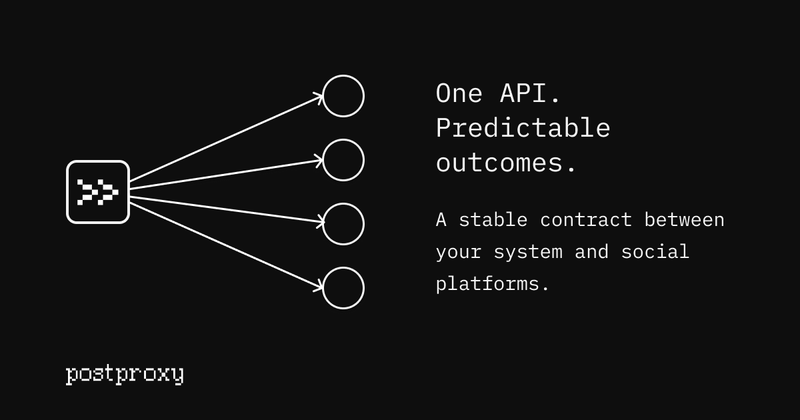
Postproxy is a unified social media API that abstracts the complexities of individual platform APIs. It takes a single payload containing content and target platforms, maps it to each platform’s rules, and returns per-platform outcomes (success, failure, status). The service runs on European infrastructure and handles OAuth flows, rate limits, and retries automatically.
Key Features
- Single REST API — Replace per-platform integrations with one endpoint; send a single payload and get per-platform results for posts, comments, and insights.
- Automatic Format Mapping — Content is transformed to comply with each platform’s specifications (e.g., image size, text length) without manual adjustments.
- Built-in Retries and Rate Limit Handling — Failed deliveries are automatically retried; rate limits are managed transparently, so your code never gets blocked.
- Comprehensive Engagement API — Reply to comments, respond to DMs, and manage reviews across Instagram, Facebook, Twitter, LinkedIn, and more through one API.
- Analytics and Logging — Every action produces a status, timestamp, log entry, and optional webhook, giving full visibility into what succeeded or failed and why.
- Agentic Workflow Support — Native MCP server and skills for Claude and Cursor enable AI agents to publish and engage autonomously.
- Official Integrations — Verified nodes for n8n, Make, Zapier, and a dedicated connector for Needle.
Who is it for?
- Developers building automated publishing systems who want to avoid maintaining multiple platform-specific integrations.
- Marketing teams managing multi-platform social strategies who need to schedule and track posts from one interface.
- Agencies running many client accounts — smart queues and profile groups keep posts, comments, and DMs strictly separated per client.
- SaaS companies embedding social features into their product — provision scoped environments per customer, let them connect their own accounts, and social actions appear under the SaaS brand.
What can you do with Postproxy?
- Publish content across platforms — Send one API request to post an image, video, or text to Instagram, Twitter, LinkedIn, TikTok, Facebook, and more simultaneously, with each platform receiving correctly formatted content.
- Manage community engagement — Use the same API to reply to comments and DMs on all connected platforms; the API returns thread context so you can maintain conversations.
- Automate with AI agents — Connect Postproxy to Claude or Cursor via its MCP server, enabling agents to research, draft, and publish social media content autonomously.
- Embed social features in SaaS — Create a scoped environment per customer, they connect their social accounts through your UI, and your product can publish, reply, and pull analytics on their behalf without them ever managing platform APIs.
How does Postproxy work?
Getting started takes under two minutes. Sign up for a free account (no credit card required), obtain an API key, and install the official SDK for Node, Python, or Ruby. For each social platform you want to use, authenticate via OAuth — Postproxy stores and refreshes tokens automatically. Then send a single POST request with your content and target platforms; the API converts the payload for each platform’s rules, publishes it, and returns per-platform status with links to the live posts. Failures are retried with exponential backoff, and all events are logged.
Pricing
Postproxy offers a free plan that requires no credit card. Paid tiers scale with usage, but specific prices are not disclosed.
Infrastructure and Compliance
All data is stored and processed on European servers. Postproxy is GDPR-compliant and is obtaining SOC 2 Type II certification. Enterprise-grade encryption, secure APIs, and strict access controls protect user data.