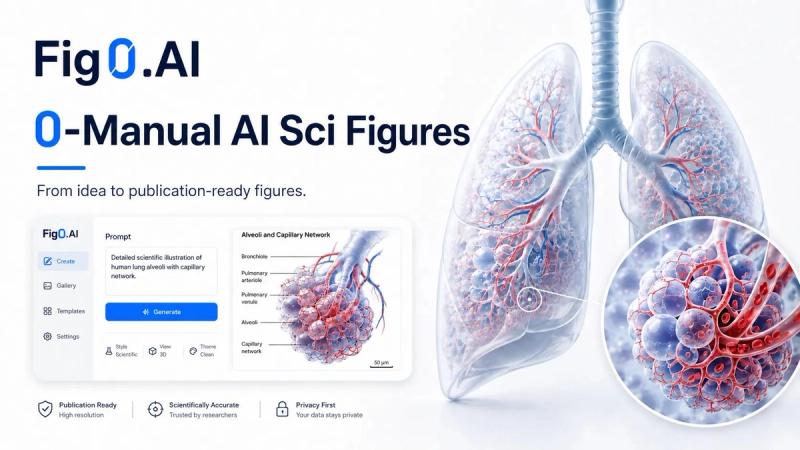
Fig0 is an AI-powered scientific figure generator that converts text, sketches, references, PDFs, and photos into publication-ready editable vector illustrations.
What is Fig0?
Fig0 is a web-based platform that uses artificial intelligence to create scientific figures from diverse inputs. It accepts text prompts, rough sketches, reference images, PDFs, photos, and even existing figures, and outputs clean, professional diagrams in editable vector formats (SVG, PPTX, PDF) or high-resolution bitmaps (PNG, TIFF). The platform is developed by Fig0 and is accessible via browser at fig0.ai.
Key Features
- Text-to-Figure — Describe a mechanism, pathway, or experimental setup in natural language and generate a structured scientific figure.
- Sketch and Reference Inputs — Upload rough drawings, screenshots, or visual references and convert them into cleaner diagrams while preserving layout intent.
- Canvas-Based Refinement — Continue arranging, annotating, and polishing inside an infinite canvas without switching tools.
- Editable Vector Delivery — Export layered SVG, editable PPTX, and vectorized PDF for team and journal-side edits.
- High-Resolution Output — Generate HD assets and export PNG or 300/600 DPI TIFF for manuscript submission and print.
- Scientific Revision Loop — Handle reviewer changes, label updates, background cleanup, and last-mile polish without rebuilding from scratch.
- 5 Input Modes — Accept text, sketches, references, PDFs, photos, and existing figures.
- Publication-Aware Styles — AI trained on scientific literature to produce journal-grade first drafts.
Who is it for?
Fig0 is designed for researchers, scientists, and educators who need to create and revise scientific figures efficiently. Specific users include:
- Associate Professors (e.g., cell biology) who can describe changes and get manuscript-ready versions before lab meetings.
- Biomedical Engineering PIs who rely on editable PPTX export for group collaboration.
- PhD Researchers (e.g., systems biology, computational chemistry) who use Fig0 to turn clear mental pathways into first drafts without manual drawing.
- Postdoctoral Fellows who need figures that survive reviewer comments and export to submission-ready formats.
What can you do with Fig0?
- Generate figures from text descriptions — Type a description of a mechanism or pathway and receive a structured, publication-ready diagram.
- Convert rough sketches to clean diagrams — Upload a hand-drawn sketch and refine it into a professional schematic without redrawing.
- Refine figures without starting over — Adjust labels, regions, colors, and composition on an infinite canvas after initial generation.
- Export in editable vector formats — Save as SVG, PPTX, or PDF for further editing in design tools or PowerPoint.
- Prepare submission-ready bitmaps — Export PNG or TIFF at 300–600 DPI for journal submission.
How does Fig0 work?
Fig0 follows a three-step workflow:
- Generate — Provide input (text, sketch, reference, PDF, photo, or existing figure). The AI creates a publication-ready draft.
- Enhance — Refine every detail on an infinite canvas: edit text, adjust regions, clean backgrounds, and upscale.
- Vectorize — Export in editable formats (SVG, PPTX, PDF) or high-resolution bitmaps (PNG, TIFF) that retain editability for team collaboration.
Pricing
Fig0 operates on a freemium model. Users can start for free with initial credits and earn up to 1200 additional free credits by inviting friends.
FAQ
Yes. After generation, every text label, region, and composition remains editable on the infinite canvas. You can refine details without restarting.
Fig0 exports layered SVG, editable PPTX, vectorized PDF, and high-resolution PNG or TIFF (300/600 DPI). These formats support further editing in design tools and direct journal submission.
No. Fig0 is trained on a broad range of scientific literature and can generate figures for any scientific discipline, including chemistry, physics, engineering, and more.
Can I use Fig0 for posters and presentations?
Yes. The editable vector exports (SVG, PPTX) are suitable for scaling and further customization in poster and presentation design workflows.
Is there a free trial?
Yes. Fig0 offers free credits upon signup, and you can earn additional free credits by inviting friends (up to 1200 total).