Newsletter
Join the Community
Subscribe to our newsletter for the latest news and updates
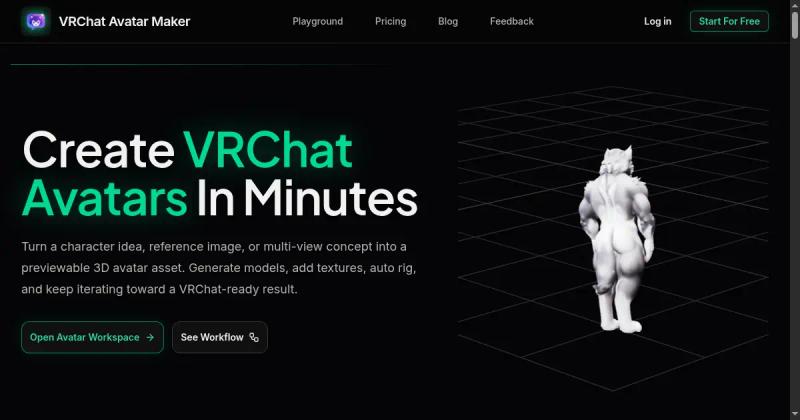
Create custom VRChat avatars online from text or images, with auto-rigging and texture generation.
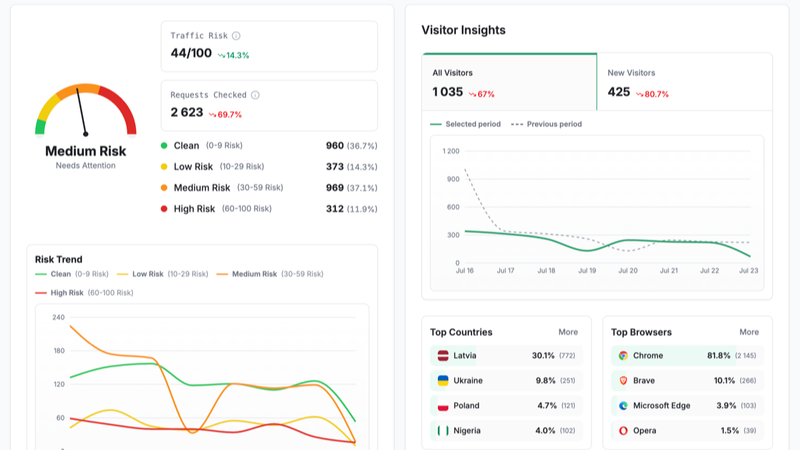
Traffic, search & AI signals for vrchatavatarmaker.com.
Third-party traffic estimate · Updated Sep 9, 2026
Submit your own product to reach creators and founders looking for the next tool to try.
VRChat Avatar Maker is an online platform that enables creators to generate, texture, rig, and preview custom VRChat avatars from text prompts or reference images, all within a single integrated workspace.
VRChat Avatar Maker is a web-based tool that transforms character ideas—expressed as text descriptions, single images, or multi-view references (front, left, back, right)—into previewable 3D avatar assets. It supports the full pipeline from concept to downloadable models in GLB or FBX formats, with auto-rigging and texture generation built in. The platform is designed for creators who want to iterate quickly without switching between separate 3D applications.
The workspace follows a four-step pipeline: (1) choose a creation mode (e.g., Text to Avatar, Image to Avatar); (2) submit prompts, reference images, or an existing model; (3) track progress with status indicators (generating, complete, failed); and (4) preview the result and either download it or continue to the next stage (texturing, rigging). This design allows users to treat each output as a building block rather than a final product.
It is an online creator workspace that helps turn prompts, concept images, or reference sets into previewable 3D avatar assets and continues through texturing, rigging, and download.
Yes. You can start from text, a single image, or multi-view references to generate and refine a custom avatar asset entirely in the browser.
The platform offers six modes: Text to Avatar, Text to Image, Image to Avatar, Multi-image to Avatar, Add Texture, and Auto Rigging.
Current outputs support GLB and FBX, suitable for preview and downstream 3D asset workflows.
No. The product lowers the barrier for users who want a VRChat avatar without mastering the full 3D and SDK pipeline.