Newsletter
Join the Community
Subscribe to our newsletter for the latest news and updates
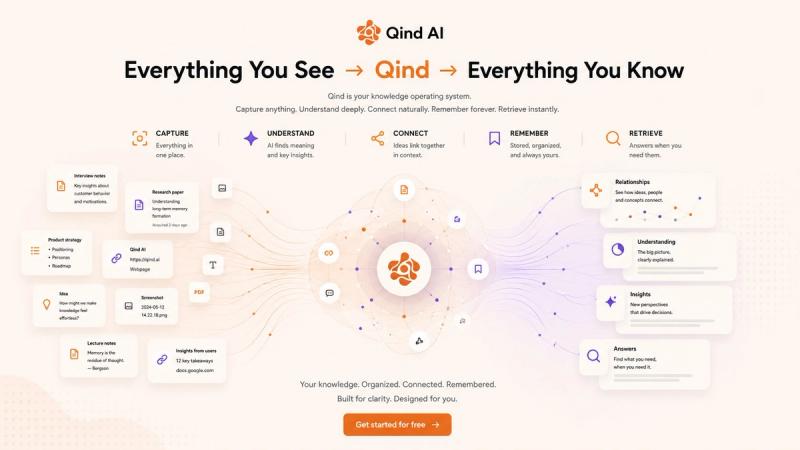
Qind AI is an AI-powered personal knowledge base that helps product managers, founders, researchers, and knowledge workers capture anything, find everything, and organize nothing.
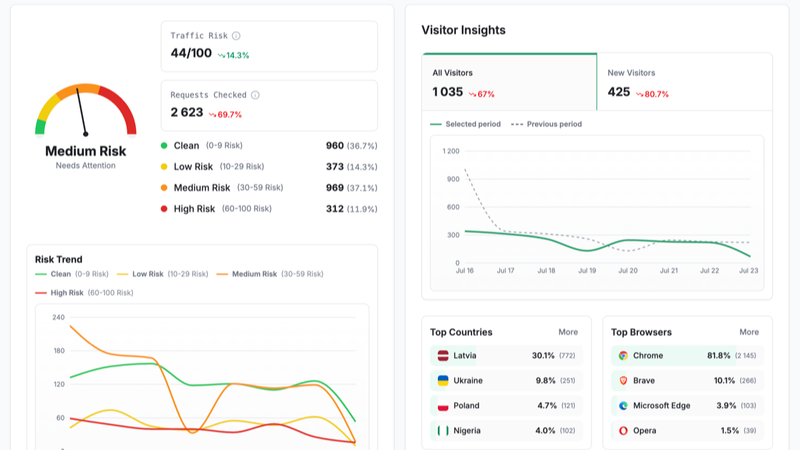
Traffic, search & AI signals for qind.ai.
Third-party traffic estimate · Updated Sep 9, 2026
Submit your own product to reach creators and founders looking for the next tool to try.
Qind AI is an AI-powered personal knowledge base that captures articles, PDFs, notes, audio, and images, then automatically summarizes and tags them so you can search your entire library in natural language and get cited answers.
Qind AI is an AI-powered personal knowledge base designed for knowledge workers who collect information from many sources. It takes inputs such as web pages, PDFs, notes, images, audio recordings, and files, and produces summarized, tagged, searchable content stored in one place. The platform runs as a web application with browser extensions for Chrome and Safari, and offers an MCP server for AI clients like Claude and ChatGPT. Qind is developed by the team at Qind AI.
The workflow is: Capture the source (webpage, PDF, note, etc.) via extension or MCP → Qind processes the content with AI to generate summaries, tags, and collections → Later, ask a natural language question → Qind searches your library and returns cited answers.
Qind offers a freemium model with three tiers: Free (€0 forever, up to 100 saved items, 3 collections, AI chat 10 queries/day), Pro (€4.79/month, unlimited items, unlimited collections and chat), and Pro Plus (€9.99/month, adds weekly digests, imports from Google Drive/Notion, priority support). Yearly billing gives 2 months free.
Yes, there is a free forever plan with up to 100 saved items, 3 collections, and 10 AI chat queries per day. No credit card required to start.
No. The FAQ states "Your saved content is never used to train AI models. The AI features work exclusively on your own knowledge base."
Qind supports web pages, PDFs, images, audio recordings, notes, text, markdown, presentations, and files. All formats move through the same capture and understanding pipeline.
Yes, Qind supports one-click import from Google Drive, Notion, Pocket, Raindrop, Evernote, Chrome bookmarks, and Safari bookmarks. The MCP server also allows integration with AI clients.
Yes, you can export your entire knowledge base at any time in standard formats. Your data is yours and never locked in.