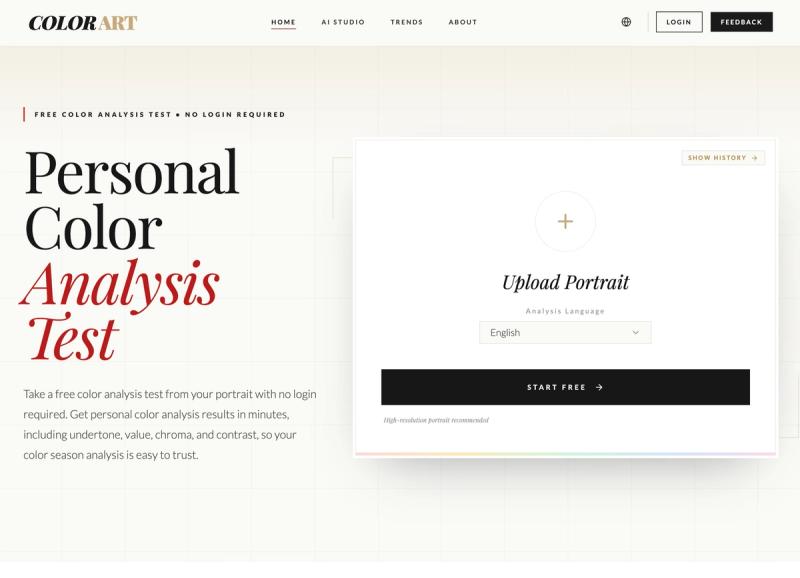
Color Analysis Art is an AI-powered online tool for personal color diagnostics. Upload a clear front-facing photo to receive a detailed color report analyzing your undertone, value, chroma, contrast, and season match with palette tips.
What is Color Analysis Art?
Color Analysis Art is a web-based AI tool that analyzes facial color signals from a portrait photo and generates a personal color report. It takes a single portrait as input and produces an analysis covering undertone, value, chroma, and contrast, along with a seasonal color shortlist and styling recommendations. The platform runs entirely in the browser and is developed by the team behind Color Analysis Art.
Key Features
- Portrait Analysis — Evaluates undertone, lightness, depth, and contrast cues from a single uploaded photo, with built-in quality checks for poor lighting or weak setups.
- Season Matching — Ranks top season matches (e.g., Bright Spring, Deep Autumn) instead of forcing a single guess, explaining why one direction fits better.
- Palette Guidance — Provides best colors, avoid colors, and practical styling notes for wardrobe, makeup, and photography planning.
- AI Studio — Generates color try-ons and styling variations from an uploaded portrait; choose palette colors and preview controlled image variations.
- Seasonal Palette Preview — Generates scarf or palette-board views for all 12 seasons from one portrait, making differences visible without manual drapes.
- Browser Extension — Chrome extension allows trying on clothes from any website by hovering product images; uses a saved reference portrait for consistent results.
- Free Tier — One free analysis without login; unlimited analysis with sign-in; AI Studio uses credits for image-based styling.
Who is it for?
- Shoppers — Test clothing colors against their own portrait before buying, reducing returns and mismatch from store lighting.
- Makeup Users — Identify undertone and value to choose foundation, lipstick, and blush that harmonize with their features.
- Stylists and Creators — Preview color palettes on client portraits for wardrobe, photoshoots, or campaign visuals.
- Color Analysis Consultants — Generate consistent, repeatable reports and seasonal comparisons to support client consultations.
What can you do with Color Analysis Art?
- Get a personal color report: Upload a portrait and receive undertone, value, chroma, contrast, and season match with best/avoid colors and styling notes.
- Try on clothes from any website: Use the Chrome browser extension to hover product images and see how they look on a saved reference portrait.
- Compare all 12 seasons: Generate scarf or palette-board views for every seasonal direction from one portrait to see warm, cool, light, deep, soft, and bright differences side by side.
- Test palettes in AI Studio: After getting color direction, upload a portrait and choose palette colors to preview controlled image variations before making real changes.
How does Color Analysis Art work?
- Upload Portrait — Upload one clear front-facing photo; the system runs quality checks on lighting and clarity.
- Analyze Signals — The AI reads undertone, value, chroma, and contrast from the portrait.
- Read the Report — See top season matches, best colors, avoid colors, and styling notes.
- Try It in AI Studio — Use the analysis results to test color directions on outfits and styling ideas using AI-generated previews.
FAQ
Is Color Analysis Art free?
Yes. One free analysis is available without login. Sign in to run unlimited color analysis. AI Studio uses credits for image-based styling or color try-ons.
What do I get in the report?
The report includes undertone direction, value and contrast clues, a season shortlist, best colors, avoid colors, and practical notes for wardrobe, makeup, and image planning.
Does it work for all skin tones?
Yes. The analysis is designed to work across different skin tones, hair colors, and contrast levels. A clear portrait is important for accuracy.
How long does the analysis take?
Most users receive their result within minutes. Photo quality is the main variable — clearer images produce faster, more stable outcomes.