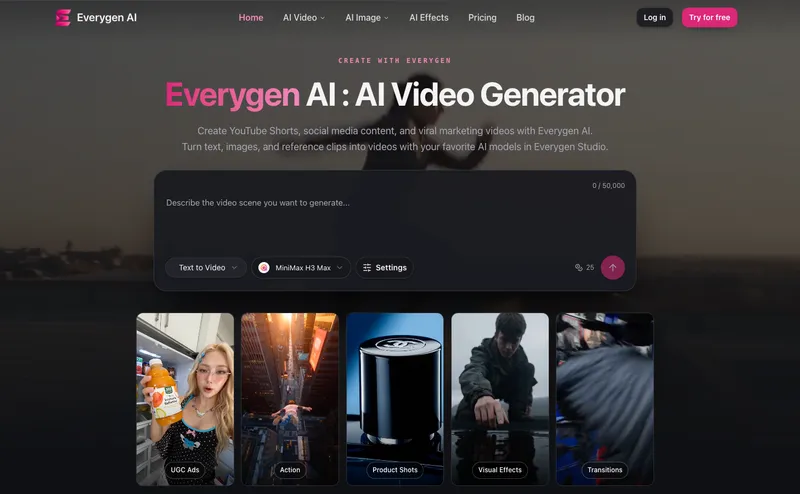

The AI Thumbnail Generator is a web-based tool that converts text prompts into high-contrast, 16:9 YouTube thumbnail concepts optimized for click-through rates.
What is the AI Thumbnail Generator?
The AI Thumbnail Generator is a web application hosted at aiphotoeditor.io that takes a text description of a video idea—optionally accompanied by a reference image—and produces polished 16:9 thumbnail visuals. The tool uses AI to generate images with strong contrast, clear focal points, and readable title text, designed specifically for YouTube's thumbnail format.
Key Features
- Text-to-thumbnail generation — Describe the topic, subject, emotion, colors, and desired title text; the AI produces a thumbnail direction from the prompt alone.
- Optional reference image input — Upload an existing image to guide style, composition, or brand consistency; leave empty to generate purely from text.
- Default 16:9 format — Outputs are automatically sized in the standard YouTube thumbnail aspect ratio, with 2K resolution available.
- High contrast and readable typography — Generates compositions that remain legible at small sizes on mobile devices, a key factor for YouTube click-through rates.
- Prompt ideas library — Built-in example prompts for gaming, tech reviews, tutorials, podcasts, product reviews, reaction videos, and Shorts covers, providing a starting point for creators.
- Fast creator workflow — Move from video idea to thumbnail concept in minutes; refine prompts iteratively to adjust faces, objects, colors, and layout.
- Multi-language support — The tool supports English, Chinese, and other languages, as noted in the product tags.
Who is it for?
- YouTube creators — Generate thumbnail directions for gaming challenges, tutorials, reaction videos, and podcast episodes without design software.
- Social media managers — Quickly produce cover concepts for YouTube Shorts and other platform content, maintaining brand consistency via reference images.
- Digital marketers — Create polished thumbnail variants for A/B testing to optimize click-through rates on video ads and organic content.
- Content creators across niches — Educators, reviewers, and entertainers can tailor prompts for their specific video types.
What can you do with it?
- Gaming and challenge thumbnails — Generate dramatic compositions with shocked creator expressions, colorful backgrounds, and bold title text like "IMPOSSIBLE WIN."
- Podcast episode covers — Create warm, studio-lit thumbnails featuring co-hosts and guest names with a premium media look.
- Tutorial and how-to videos — Produce clean setups with clear focal points and bright colors, with readable text like "EDIT FASTER."
- Product review thumbnails — Build dramatic tech visuals with glowing devices, studio lighting, and large text headlines such as "BEST PHONE?"
- Reaction and commentary thumbnails — Design intense energy scenes with cinematic lighting and high-contrast titles.
- YouTube Shorts cover concepts — Adapt the 16:9 output for short-form vertical covers as needed.
How does it work?
- Describe the video — Write the topic, niche, subject, emotion, color palette, and the short title text you want in the thumbnail.
- Generate thumbnail concepts — Use the AI tool to create visual directions before committing to a final design.
- Refine for YouTube — Adjust contrast, subject size, composition, and title readability until the thumbnail reads instantly on mobile.
FAQ
What is an AI thumbnail maker for YouTube?
It turns a written creative brief—such as a video topic and desired mood—into thumbnail image concepts, saving creators time on design.
Can I create thumbnails in 16:9 format?
Yes. The tool defaults to 16:9 specifically for standard YouTube thumbnails, with a 2K resolution option.
Can the thumbnail include title text?
Yes. Describe the short title you want in the prompt, and ask for large, high-contrast typography that remains readable on mobile screens.
Can I use the generated thumbnails commercially?
You can use outputs for creator and marketing workflows, but review each image for brand accuracy, likeness concerns, and platform requirements before publishing.