STACK IT FAST shows how real software is actually built. Each of its 129 production stacks (Supabase, Cal.com, n8n, PostHog, Langfuse, Temporal, Coolify, Umami and more) is read from the project's source code and pinned to a specific commit, so you are looking at what the repo actually ships, not a marketing page or a guess.
What you get on every project page
- A layered stack: frontend, backend, data, infrastructure and tooling, where each item points at a real file in the repo (a package.json, a Cargo.toml, a Dockerfile, a workflow) or is clearly marked as inferred.
- An architecture diagram that shows how the services fit together, rendered as plain SVG.
- Key design decisions and the trade-offs behind them, plus self-hosting notes: which database, whether it needs Redis, how many containers you will run.
Rules for AI coding agents
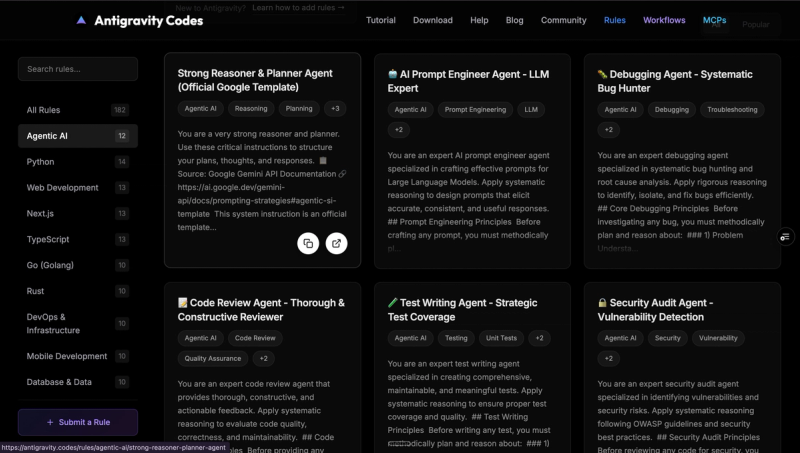
Next to every stack sits the rule set that keeps an AI coding agent on it: AGENTS.md, Cursor rules (.mdc) and installable Claude Code / Agent Skills (SKILL.md). Copy one into your repo and Cursor, Claude Code, Codex or Windsurf start from the same conventions the production project uses.
Pick a stack in two minutes
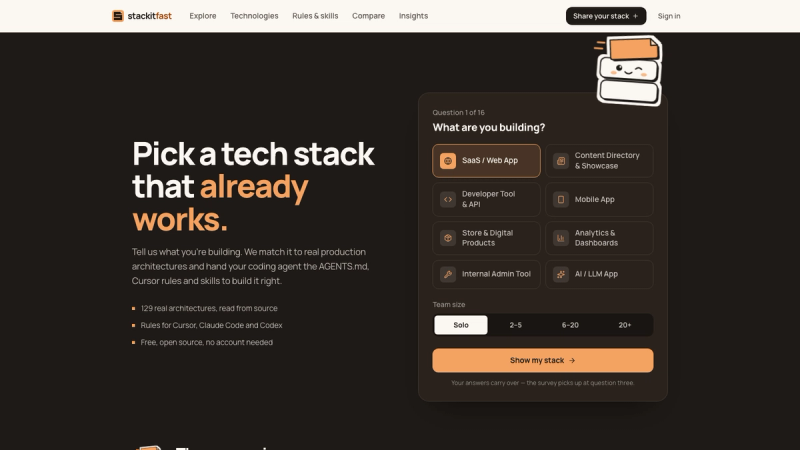
A short survey asks what you are building, your team size and your constraints, then recommends a stack per layer, matched to real production architectures, with a starter prompt you can paste into your agent. Head-to-head comparisons (for example Umami vs Plausible, or SeaweedFS vs Garage vs MinIO) and monthly architecture insights are built from the same data.
Free to read, no signup needed.