Newsletter
Join the Community
Subscribe to our newsletter for the latest news and updates
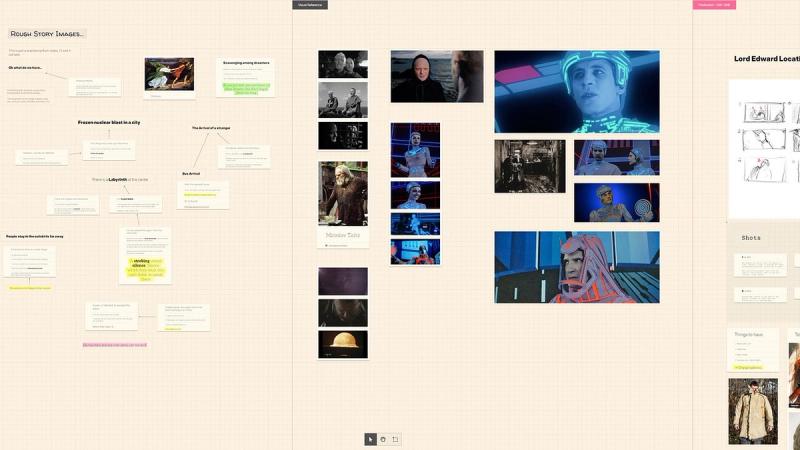
Lay out out your research visually
Submit your own product to reach creators and founders looking for the next tool to try.
Loose Thought revolutionizes how professionals, academics, researchers, and knowledge workers capture, organize, and present their complex research. This innovative visual mindmapping and note-taking platform bridges the critical gap between traditional linear note-taking tools and freeform whiteboard applications, delivering a uniquely powerful solution for anyone who needs to transform scattered research into coherent, memorable presentations.
Today's researchers, analysts, and professionals face an unprecedented challenge: managing vast amounts of information while maintaining the ability to see how concepts interconnect. Traditional note-taking applications force users into linear, hierarchical structures that fragment complex ideas into isolated pieces. Conversely, whiteboard and canvas-based tools excel at spatial freedom but lack the depth, keyboard efficiency, and organizational structure needed for serious research documentation. This leaves professionals struggling to simultaneously capture detailed information and visualize the big picture—a critical requirement when preparing to explain intricate research to stakeholders, colleagues, or audiences unfamiliar with the subject matter.
Loose Thought represents a paradigm shift in research management by seamlessly combining the visual layout capabilities of canvas-based tools with the depth and keyboard-driven efficiency of professional note-taking applications. The platform is specifically engineered around the concept of a research notebook—that carefully maintained, paper-based reference document that professionals have relied on for generations. But unlike a physical notebook, Loose Thought adds powerful digital capabilities that enhance rather than replace this familiar workflow.
The interface employs a paper-like design philosophy that feels immediately intuitive. Rather than forcing researchers into predetermined categories or rigid hierarchies, Loose Thought allows complete freedom in spatial arrangement. Users can position research components wherever they make sense conceptually, creating visual relationships that mirror their thinking process. This spatial arrangement becomes a powerful mnemonic device, helping users remember not just what they researched, but how different elements connect and relate to each other.
At its core, Loose Thought provides rich visual layout capabilities that transform research into visually memorable presentations. Users can create custom visual hierarchies, arrange information spatially according to conceptual relationships, and build visual narratives that tell the story of their research. The platform supports multiple content types—text, images, links, embedded media—allowing researchers to build comprehensive, multimedia research collections.
The keyboard-driven note-taking system ensures that capturing detailed information doesn't require reaching for the mouse. Professional typists and researchers appreciate the efficiency of keyboard shortcuts and text-first workflows. Loose Thought respects this preference, providing comprehensive keyboard navigation and command systems that accelerate research documentation. Users can rapidly capture nuanced information, detailed citations, methodology notes, and analytical observations without losing their train of thought through interface navigation.
The paper-like notebook concept means that organization emerges naturally from use rather than being imposed artificially. Researchers can work in a way that matches their natural thinking process, creating increasingly sophisticated visual maps of their research landscape as their understanding deepens. This approach proves particularly valuable for complex research domains where understanding emerges through the process of organizing and