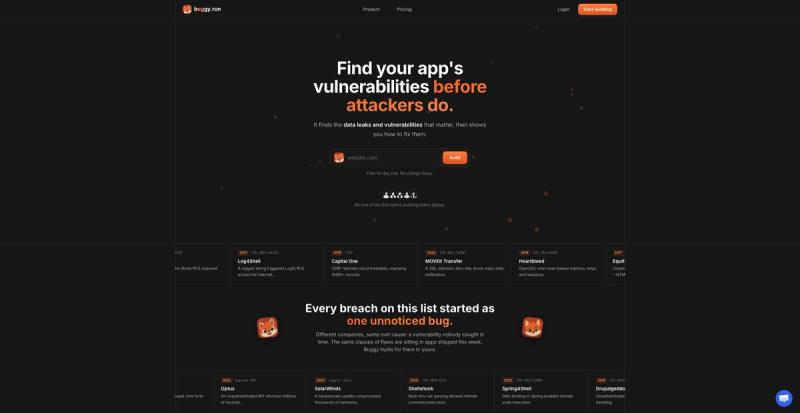
buggy.run is an AI-powered security audit platform that crawls both public and authenticated pages of web applications, captures real network traffic, and identifies data leaks and vulnerabilities with plain-English fix instructions.
What is buggy.run?
buggy.run is a web-based security auditing tool that takes a target URL (and optional test credentials) as input and produces a ranked list of vulnerabilities with explanations and fixes. It runs entirely in the cloud—no SDK installation or code changes required—and is built by the Buggy team (no company name visible on the site).
Key Features
- AI data-leak analysis — Inspects every captured HTTP response for session tokens, PII, API keys, and other secrets that shouldn't be on the wire, catching context-dependent leaks pattern-based scanners miss.
- 56+ automated security checks — Tests for security headers, TLS/SSL misconfigurations, cookie issues, SQL injection, XSS, forced browsing, and more, applied to every discovered page.
- Authenticated crawling — Using provided credentials (auto sign-in or manual), Buggy explores pages behind login that most scanners never reach, including dashboards, settings, and APIs.
- AI triage agent — Findings are ranked by severity and explained in plain English; users can ask follow-up questions, resolve, or ignore findings in one click.
- Safe load and rate-limit tests — Capped, non-disruptive probes reveal missing rate limits, account lockouts, and input-handling flaws without taking the app down.
- Continuous or on-demand audits — Schedule recurring scans or run manual audits before releases; regressions and new endpoints are caught automatically.
- One free audit — No credit card required to start.
Who is it for?
- Solo developers and small teams — Use Buggy to catch vulnerabilities before shipping, without needing a security background. The Starter plan fits this group.